East Africa Country Playbooks
The East Africa CXO Generative AI Playbook for 2026, Nairobi, Dar es Salaam, Addis Ababa and Kampala

Why East Africa is the most under-rated Generative AI opportunity on the continent in 2026
East Africa in 2026 is a market that global commentators consistently underestimate. The region is anchored by four economies that, taken together, represent the most diversified, fastest formalising and most digitally fluent enterprise base on the African continent outside South Africa and Nigeria. Kenya is the regional financial and technology hub, Tanzania has emerged as the East African Community's growth engine, Ethiopia is in the middle of a structural macro reset that is opening sectors that were closed for decades, and Uganda continues to be the fast follower with a young and increasingly skilled workforce.
What distinguishes East Africa from other African regions in 2026 is not the absolute size of any single economy, it is the speed at which boards are converging on the same Generative AI questions. A Tier one Kenyan bank, a Tanzanian telco, an Ethiopian state owned enterprise and a Ugandan FMCG group are all asking variants of the same seven questions about Generative AI strategy, governance, ROI and talent. The CXO who can answer those questions with one regional playbook, adapted to the legal and operational realities of each country, has a real competitive edge.
This playbook is written for that regional CXO. It is built from real engagements AltaFuturis has run with East African banks, telcos, manufacturing groups, NGOs and government agencies over the last two years. It walks through the regulatory backdrop in each market, the sector specific use cases that are creating measurable value today, the AI governance pattern that survives regulator scrutiny, the talent equation, the ROI math and a concrete 90 day roadmap.
The East African policy and regulatory landscape, country by country
Kenya is the most mature data protection environment in the region. The Data Protection Act 2019 is enforced by the Office of the Data Protection Commissioner (ODPC), which has been actively issuing enforcement notices and guidance, and the ICT Authority has published a National AI Strategy that sets the direction for talent, infrastructure and sectoral adoption. The Central Bank of Kenya has its own cybersecurity guidance for the banking sector, the Insurance Regulatory Authority has guidance for insurers, and the Capital Markets Authority is paying close attention to automated investment advice. CXOs in Kenya should treat ODPC notifications, DPIAs and a documented lawful basis as table stakes for any Generative AI use case that touches personal data.
Tanzania's Personal Data Protection Act came into force in 2022 and is enforced by the Tanzania Personal Data Protection Commission, which has issued registration requirements for data controllers and processors. The Tanzania Communications Regulatory Authority (TCRA) regulates electronic communications and online content. Generative AI programs in Tanzania need to register the relevant data controllers and processors with the Commission, document cross border data transfer arrangements, and pay attention to TCRA expectations on consumer facing AI services.
Ethiopia is the most complex of the four markets and the most rewarding for CXOs who get the early sequencing right. The Ministry of Innovation and Technology and the Ethiopian AI Institute set the national direction. INSA (the Information Network Security Agency) sits at the centre of cybersecurity. The financial sector is undergoing the most consequential opening in a generation, and the new private sector banks, the telecommunications operators (Ethio Telecom and the new entrants) and the large state owned enterprises are simultaneously building Generative AI capability and the governance perimeter around it. CXOs should expect specific guidance on data residency, sovereign cloud and lawful basis to evolve quickly, and should design their programs to be resilient to that evolution.
Uganda's Data Protection and Privacy Act 2019 is enforced by the Personal Data Protection Office under NITA-U. The framework is principles based and broadly aligned to international norms, and the regulator has been progressively building enforcement capability. Sector regulators (the Bank of Uganda, the Insurance Regulatory Authority, the Uganda Communications Commission) layer on their own expectations. The Ugandan environment rewards CXOs who anchor their programs on simple, well documented controls and avoid the temptation to over engineer governance for use cases that do not touch personal data.
The practical implication for any East African CXO running a regional program is that the governance charter must be built once at group level and then localised to each country, with a named in country owner responsible for the registration, notification and DPIA obligations specific to that country. The cost of getting this right at the start is small. The cost of getting it wrong after a regulator query is large.
The seven board questions every East African CXO is being asked in 2026
Across boards in Nairobi, Mombasa, Dar es Salaam, Arusha, Addis Ababa, Hawassa, Kampala and Entebbe, AltaFuturis has heard the same seven Generative AI questions in 2026. The questions are reproduced verbatim from real board minutes with names removed.
- What is our written 12 month Generative AI roadmap, who owns it at executive committee level, and how is it sequenced quarter by quarter across all the East African markets we operate in
- Which AI use cases are we prioritising in 2026, what is the business case for each in local currency, and what is the payback window in each market
- What is our AI governance charter, how does it map to the Kenyan DPA, the Tanzanian PDPA, the Ugandan DPPA and Ethiopian guidance, and which board committee owns it
- What is our policy on data residency in each country, model selection, vendor lock in, and the use of foreign large language models on East African customer data
- How are we measuring return on AI investment, what is our baseline in each country, and how will we report it to the board at 90 day, 180 day and 365 day milestones
- What is our AI talent strategy across the East African Community, how many people are we training in each country in 2026, and what is our retention plan in a market where AI talent attrition is rising
- What is our AI risk register, what are the top five inherent risks, and what is the crisis playbook if a model goes wrong on a customer facing channel in any of our East African markets
Sector deep dive, where Generative AI is creating real value in East Africa
The sector pattern across East Africa in 2026 is more uniform than people assume, but the pace differs city by city. We use the same diagnostic with every regional client.
Tier one banks in Kenya (Equity, KCB, Co-operative, Stanbic, NCBA, Absa Kenya and DTB), in Tanzania (CRDB, NMB, NBC, Stanbic Tanzania), in Ethiopia (Commercial Bank of Ethiopia, Awash, Dashen, Bank of Abyssinia and the new private entrants) and in Uganda (Stanbic Uganda, Centenary, dfcu, Absa Uganda) are all running Generative AI programs across customer service automation, internal knowledge retrieval for relationship managers, credit memo drafting, AML alert triage, regulatory reporting drafting and software engineering productivity. The Kenyan banks are the most mature, with multiple programs that have moved from pilot into measured rollout. The Tanzanian and Ugandan banks are typically twelve to eighteen months behind Kenya. The Ethiopian banks have the largest absolute opportunity given the structural reset, and are moving fast.
Telecommunications operators (Safaricom, Airtel Kenya, Vodacom Tanzania, Airtel Tanzania, Tigo, Ethio Telecom, Safaricom Ethiopia, MTN Uganda and Airtel Uganda) are running Generative AI in network operations, customer care voice and chat, fraud analytics, B2B sales acceleration and content moderation. M-Pesa and the broader mobile money ecosystem create a uniquely East African opportunity to use Generative AI in financial inclusion, micro merchant onboarding and dispute resolution at scale.
Tea, coffee, horticulture, dairy and agribusiness groups across Kenya, Tanzania and Uganda are using Generative AI in supply chain optimisation, smallholder farmer engagement (often through SMS and voice channels in Swahili and other local languages), traceability documentation and export market intelligence. The opportunity is large because the sector is large, and because well designed prompts can compress weeks of research into hours.
Tourism, conservation and hospitality groups in Kenya, Tanzania and Uganda (the safari operators, the lodge groups, the airlines and the marketing boards) are using Generative AI in itinerary personalisation, multilingual content production, dynamic pricing and customer service. Arusha and the Northern Tanzania circuit, the Kenyan coast and the Ugandan gorilla circuit are all live use cases.
Ethiopian state owned enterprises and the new private sector entrants in banking, telecommunications, logistics and energy are using Generative AI in document modernisation (a huge opportunity given the volume of legacy paperwork), translation between Amharic, Afaan Oromo, English and other languages, and process automation. The Ethiopian opportunity is unusually large because the macro reset is creating new institutions that can adopt Generative AI native ways of working from day one rather than retrofitting legacy.
Use case prioritisation, the AltaFuturis 2x2 for East African enterprises
We use the same two by two we use everywhere else. Vertical axis is value, defined as annual local currency impact (cost reduction, revenue uplift or risk reduction). Horizontal axis is feasibility, defined as a composite of data readiness, regulatory clearance, change management complexity and vendor availability. Every candidate use case is plotted, and the executive committee picks no more than three for the next 90 days from the high value, high feasibility quadrant.
For most East African tier one banks and telcos, the high value, high feasibility quadrant in 2026 contains some combination of the following: contact centre copilots, internal knowledge retrieval for the relationship manager or care agent population, regulatory reporting drafting assistants, AML and fraud alert triage, software engineering productivity (with measured pull request throughput), and HR and finance back office automation through Microsoft Copilot or equivalent.
For agribusiness, tourism and Ethiopian state owned enterprises, the highest value early use cases are typically multilingual content production (Swahili, Amharic, Luganda, English), supplier and farmer engagement automation, document modernisation and procurement intelligence. The Applied AI and Predictive Analytics MasterClass, paired with the AI Driven Data Storytelling MasterClass, is the combination that has worked best for these clients in our experience.
AI governance, the regional charter every East African enterprise needs
A defensible Generative AI governance charter for an East African regional enterprise in 2026 has three layers. The group layer sets common principles, the model inventory standard, the vendor risk standard, the incident response playbook and the cadence of board reporting. The country layer adapts the charter to the specific data protection law of each country (Kenyan DPA, Tanzanian PDPA, Ugandan DPPA, Ethiopian guidance), names the in country Data Protection Officer and documents the local registration, notification and DPIA obligations. The use case layer applies, for each AI system in production, a documented lawful basis, a data residency decision, a vendor risk assessment and a rollback plan.
The most common failure mode we see is treating the country layer as an afterthought. A group level charter that has not been localised to Kenyan, Tanzanian, Ethiopian and Ugandan law does not survive a regulator query in any of those countries. The cost of building the country layer at the start of the program is small, the cost of retrofitting it after a regulator query is large, and the reputational cost of a public enforcement action is much larger still.
The East African AI talent equation, a regional view
The East African AI talent market in 2026 has its own dynamics. Nairobi is the regional centre of gravity for AI engineering talent, with a strong base of senior engineers in the banking, telecommunications and technology sectors and an increasingly mature local startup ecosystem. Dar es Salaam, Arusha, Kampala and Addis Ababa each have growing pools of younger AI literate talent, often educated locally and increasingly internationally.
The pattern that works across the region is the same three layer model we recommend everywhere. A small core AI team of five to fifteen people at the regional centre (typically Nairobi) who own architecture, governance and the most strategic use cases. A larger population of citizen developers and AI literate business leaders, typically two hundred to two thousand people across the region, trained through structured Applied AI MasterClasses to use Generative AI tools well in their day to day work. And a curated set of two to three external partners who supplement the core team without replacing it.
Training the second layer is where AltaFuturis spends most of its time in East Africa. The Generative AI MasterClass for CXOs and Business Leaders, the Applied AI and Predictive Analytics MasterClass and the AI Strategy and Digital Innovation MasterClass for HR Professionals are the three most requested programs from East African clients in 2026.
ROI math, how to defend Generative AI investment to an East African board
The discipline that works is the same as everywhere. Every use case is anchored on three numbers: baseline cost or revenue today, expected impact at 12 months, and the change management cost required to capture that impact.
For internal productivity programs (Microsoft Copilot or equivalent) across East Africa, the defensible math starts with hours saved per user per week, multiplied by the loaded cost per hour in local currency, multiplied by the number of trained users, minus the licence cost and the training cost. A trained mid level East African knowledge worker typically recovers between two and five hours per week within 90 days of structured training, and the loaded cost per hour ranges widely by country and sector. Reporting this in Kenyan Shilling, Tanzanian Shilling, Ethiopian Birr or Ugandan Shilling terms, with explicit assumptions on each multiplier, allows the board to challenge the numbers rigorously.
For customer service automation, the defensible math starts with average handling time, first contact resolution rate and cost per contact today, with a clear before and after measured on a controlled cohort. For credit, fraud and AML use cases, the math is in basis points of cost to income or in local currency value of risk reduced. The board does not need a PhD level model, it needs a one page sheet per use case with five numbers, the assumptions behind each, and a named owner.
The East African CXO 90 day Generative AI roadmap
The 90 day roadmap below is the one AltaFuturis recommends to every East African CXO who is starting from a base of curiosity and ad hoc pilots. It assumes a regional enterprise operating in two or more East African countries.
- Days 1 to 15, name the executive sponsor, ratify the group governance charter at executive committee level, and inventory every AI tool already in use across the region
- Days 16 to 30, name the in country Data Protection Officers in each market, run the use case prioritisation 2x2 with the top 30 leaders, and pick the three use cases for the first 90 days
- Days 31 to 45, deliver an Applied AI MasterClass for the top 30 leaders (typically as a regional cohort hosted in Nairobi or as country cohorts in Nairobi, Dar es Salaam, Addis Ababa and Kampala), sign the acceptable use policy, and launch the model inventory and DPIA process
- Days 46 to 60, build wave one prompt libraries and workflow templates for the three chosen use cases, train the first cohort of power users in each country, and measure baselines
- Days 61 to 75, go live with wave one in a controlled cohort in each country, capture before and after metrics weekly, and feed lessons into a second wave of training
- Days 76 to 90, report to the board on hours saved, local currency impact in each country, risks observed and the plan for the next 90 days, with a recommendation on which two additional use cases enter the pipeline
How AltaFuturis runs Applied AI MasterClasses in East Africa
AltaFuturis runs the Applied AI MasterClass series across East Africa in three formats. Onsite cohorts are delivered at the participant organisation's office in Nairobi, Mombasa, Kisumu, Eldoret, Dar es Salaam, Arusha, Mwanza, Addis Ababa, Hawassa, Bahir Dar, Mekelle, Dire Dawa, Kampala, Entebbe or Jinja, or as an executive offsite at a hotel of the participant's choice. Virtual cohorts are delivered live across East Africa Time (EAT) business hours over four sessions of three hours each. Online cohorts combine self paced video with two live coaching sessions per week.
Six specialised programs are available in every East African cohort. The Generative AI MasterClass for CXOs and Business Leaders, the Applied AI and Predictive Analytics MasterClass, the AI Driven Data Storytelling MasterClass, the Adaptive Leadership MasterClass for AI Accelerated Business, the AI Strategy and Digital Innovation MasterClass for HR Professionals and the AI Customer Segmentation and Personalised Marketing MasterClass.
Pricing is set in USD for global parity, with Pricing of USD 650 per participant valid till 30 June 2026, after which the regular price of USD 800 per participant applies. Onsite MasterClasses are priced at USD 1050 per participant under the scheme till 30 June 2026, with regular pricing of USD 1200 per participant thereafter. East African corporates can pay in Kenyan Shillings, Tanzanian Shillings, Ethiopian Birr or Ugandan Shillings at the prevailing central bank exchange rate, and group discounts apply for cohorts of five or more participants from the same organisation. The trainer for each cohort is confirmed closer to the date and shared in writing with the client.
If you would like to bring an Applied AI MasterClass to your Nairobi, Mombasa, Dar es Salaam, Arusha, Addis Ababa or Kampala team, the fastest path is to use the contact form on this site or to reach the AltaFuturis team directly through the channels listed in the footer. We typically respond within one business day with a tailored proposal that maps the program to the seven board questions covered earlier in this playbook.
Frequently Asked Questions
Which East African country is the most mature for Generative AI adoption in 2026?
Kenya is the most mature data protection and AI policy environment in East Africa, anchored by the Data Protection Act 2019, the Office of the Data Protection Commissioner and the ICT Authority's National AI Strategy. Tanzania, Uganda and Ethiopia are typically twelve to twenty four months behind Kenya on regulatory maturity but are catching up quickly. The right answer for a regional CXO is to design the program to Kenyan standards and then localise to the specific obligations of each other market, rather than designing to the lowest common denominator.
What is the most important AI regulation for a Kenyan enterprise in 2026?
The Data Protection Act 2019, enforced by the Office of the Data Protection Commissioner (ODPC), is the primary law governing how personal data used to train and prompt AI systems is collected, processed and stored in Kenya. CXOs should also track the ICT Authority's National AI Strategy, the Central Bank of Kenya's cybersecurity guidance for the banking sector, the Insurance Regulatory Authority's expectations and the Capital Markets Authority's approach to automated investment advice.
How should a regional East African enterprise design its AI governance charter?
In three layers. A group layer that sets common principles, the model inventory standard, the vendor risk standard, the incident response playbook and the cadence of board reporting. A country layer that adapts the charter to the Kenyan DPA, the Tanzanian PDPA, the Ugandan DPPA and Ethiopian guidance, names the in country Data Protection Officer and documents the local registration, notification and DPIA obligations. And a use case layer that documents lawful basis, data residency, vendor risk and rollback plan for each AI system in production.
Should an East African enterprise use foreign large language models on East African customer data?
It depends on the use case and the data. Foreign hosted models can be used safely for use cases that do not touch personal data, or where data is robustly anonymised and the lawful basis is documented. For use cases that touch identifiable customer data in Kenya, Tanzania, Ethiopia or Uganda, the safer pattern is to use models hosted in approved data residency zones, with a documented Data Processing Agreement, a vendor risk assessment and an explicit cross border data transfer assessment. The decision should be made by the Chief Risk Officer and the in country Data Protection Officers together.
How long does it take an East African enterprise to go from pilot to measured rollout of Generative AI?
In our experience with East African tier one banks and telcos, a structured 90 day program is enough to take three prioritised use cases from baseline to a controlled wave one rollout with measured before and after metrics in each country. Going to enterprise scale across two or more East African countries typically takes a further nine to twelve months. Programs that try to skip the governance and training steps and go straight to enterprise rollout almost always stall at the first regulator query.
What is the Pricing for AltaFuturis Applied AI MasterClasses in East Africa?
Pricing for all six AltaFuturis Applied AI MasterClasses is USD 800 per participant. For Onsite MasterClasses, pricing is USD 1050 per participant till 30 June 2026, with regular pricing of USD 1200 per participant thereafter. East African corporates can pay in Kenyan Shillings, Tanzanian Shillings, Ethiopian Birr or Ugandan Shillings at the prevailing central bank exchange rate, and group discounts apply for cohorts of five or more participants from the same organisation.
Are the MasterClasses delivered onsite in Nairobi, Dar es Salaam, Addis Ababa and Kampala, or only virtually?
All six AltaFuturis Applied AI MasterClasses are delivered in three formats. Onsite cohorts run at the participant organisation's office or at an executive offsite venue in Nairobi, Mombasa, Kisumu, Eldoret, Dar es Salaam, Arusha, Mwanza, Addis Ababa, Hawassa, Bahir Dar, Mekelle, Dire Dawa, Kampala, Entebbe or Jinja. Virtual cohorts run live across East Africa Time business hours over four sessions of three hours each. Online cohorts combine self paced video with two live coaching sessions per week.
Who is the trainer for the East African cohorts of the Applied AI MasterClass?
The trainer for each East African cohort is confirmed closer to the cohort date and is shared in writing with the client organisation as part of the proposal. AltaFuturis assigns trainers based on the sector mix of the cohort and the specific MasterClass programs requested. Mr Ganesh Shevade is the author of this playbook and the Co-Founder and CEO of AltaFuturis Solutions, and is not necessarily the trainer for any given cohort.
References and further reading
- Office of the Data Protection Commissioner (ODPC), Kenya, Republic of Kenya
- ICT Authority of Kenya, National AI Strategy 2025-2030, Republic of Kenya
- Central Bank of Kenya, Guidance on Cybersecurity for the Banking Sector, Central Bank of Kenya
- Communications Authority of Kenya, sector statistics, CA Kenya
- Tanzania Personal Data Protection Commission, United Republic of Tanzania
- Tanzania Communications Regulatory Authority, TCRA
- Ministry of Innovation and Technology, Ethiopia (MInT) and the Ethiopian AI Institute, Federal Democratic Republic of Ethiopia
- Ethiopian National Cybersecurity Strategy and INSA, Government of Ethiopia
- National Information Technology Authority Uganda (NITA-U) and the Personal Data Protection Office, Government of Uganda
- World Bank, Digital Economy for Africa (DE4A) country diagnostics, World Bank
- GSMA, The Mobile Economy Sub-Saharan Africa, GSMA
- OECD AI Principles, OECD
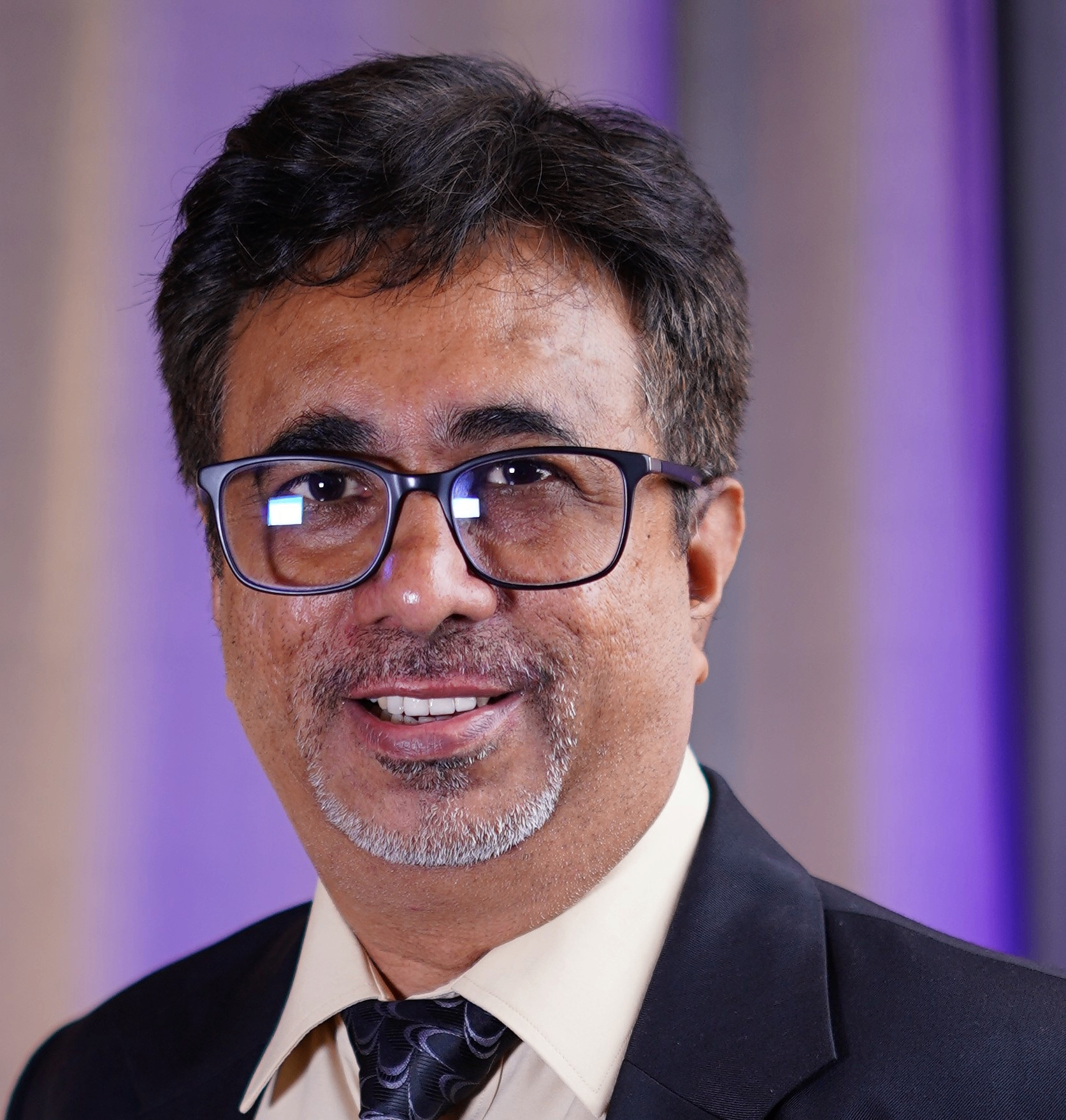
About the author
Ganesh Shevade
Co-Founder and CEO, AltaFuturis Solutions
Ganesh Shevade is Co-Founder and CEO of AltaFuturis Solutions and the curator of the AltaFuturis Applied AI MasterClasses for CXOs and senior leaders across the UAE, Africa, India and the United States. He works with boards and executive teams on Applied AI strategy, Generative AI adoption, Microsoft 365 Copilot rollouts, predictive analytics, and AI governance. Cohorts are delivered by AltaFuturis senior expert faculty alongside ConsultValiant FZC's Dubai-based GCC and Africa faculty.
Related articles
Kenya Country Playbooks
Applied AI MasterClasses in Kenya, Generative AI Training for Non-Technical CXOs and Decision Makers in 2026
Kenya's boards in Nairobi and beyond are operationalising AI in 2026. The AltaFuturis Applied AI MasterClasses give non-technical CXOs, MDs, Country Heads and senior leaders in Kenya a structured, board grade Generative AI curriculum across six programs, with July and August 2026 cohorts in Virtual, Online and Onsite formats.
Read articleTanzania Country Playbooks
Applied AI MasterClasses in Tanzania, Generative AI Training for Non-Technical CXOs and Decision Makers in 2026
Tanzania's boards in Dar es Salaam and beyond are operationalising AI in 2026. The AltaFuturis Applied AI MasterClasses give non-technical CXOs, MDs, Country Heads and senior leaders in Tanzania a structured, board grade Generative AI curriculum across six programs, with July and August 2026 cohorts in Virtual, Online and Onsite formats.
Read articleCity Guides
The Dar es Salaam Applied AI MasterClass Guide for 2026, A CXO Roadmap for Tanzania
Dar es Salaam is the commercial capital of Tanzania and the gateway port for the wider East African interior. This guide is the Applied AI MasterClass roadmap we hand Dar es Salaam CXOs in 2026.
Read articleBrowse related categories
Free Assessment
Enterprise AI Readiness Test
10 quick questions. Under 4 minutes. Get a personalised AI Readiness score, maturity level and recommended MasterClasses, with a branded PDF report delivered to your inbox.
On-Demand
Free Foundation Webinar
New to Applied AI? Watch our complimentary 45-minute foundation webinar. Understand what Generative AI means for your function, your industry and your career in the UAE, Africa and beyond.
Featured Onsite Cohorts, July 2026
Applied AI and Predictive Analytics, Onsite MasterClass in East Africa
Join our three day Onsite MasterClass on Applied AI and Predictive Analytics, From Data Insights to Scalable Growth. Delivered by AltaFuturis senior expert faculty. Standard Fee USD 1,200, USD 1,200 per participant.
Nairobi, Kenya
23 to 25 July 2026
Three day onsite workshop in Nairobi for Business Leaders, Functional Heads and Cross-Industry Professionals across Kenya and East Africa.
Reserve seat, NairobiAddis Ababa, Ethiopia
29 to 31 July 2026
Three day onsite workshop in Addis Ababa for Business Leaders, Functional Heads and Cross-Industry Professionals across Ethiopia and the Horn of Africa.
Reserve seat, Addis AbabaPersonalised Guidance
Have Questions? Send Us an Enquiry
Not sure which MasterClass fits your team? Want a bespoke in-house proposal for your organisation in the UAE, Nigeria, Kenya or elsewhere? Tell us your goals and we will recommend the right programme, format and schedule.
Recommended MasterClass for this topic
AI Strategy and Digital Innovation for HR Professionals
Built for CHROs, HR Directors and People & Culture leaders. USD 800. Live cohorts and bespoke in-house formats available.
Continue exploring
- Take the free Enterprise AI Readiness Diagnostic
- Browse all six Applied AI MasterClasses
- See MasterClass cohorts in Kenya
- Onsite MasterClass, Nairobi Kenya, 23 to 25 July 2026
- Onsite MasterClass, Addis Ababa Ethiopia, 29 to 31 July 2026
- About curator Ganesh Shevade, Co-Founder and CEO, AltaFuturis Solutions
- Talk to AltaFuturis about a bespoke cohort
- Why AltaFuturis Applied AI MasterClasses