Regulation and Governance
Microsoft Build 2026, Agent-to-Agent Goes Live and the Trust Question Every Board Must Answer
The vendor reframe that matters most
Microsoft Build 2026 shipped seven new in-house models and made agent-to-agent orchestration generally available. Those are the engineering headlines. The leadership headline is the single sentence the company chose to lead its enterprise messaging with. The value of an agent is not just what it can do but whether it can be trusted in production. That sentence is a deliberate reframe. It moves the centre of gravity from capability, which is the vendor's responsibility, to trust, which is the customer's responsibility.
For CXOs across the UAE, Nigeria, Kenya, Tanzania and Ethiopia, the reframe matters because it tells you what the largest enterprise AI vendor in the world believes the next twelve months of contract negotiations, audit conversations and board reviews will be about. It also tells you what your competitors are about to be measured on. If the vendor is signalling that trust is the differentiator, the buyers who lead on trust will pull ahead of the buyers who lead on procurement price.
What changed at Build 2026
Three substantive changes matter for the boardroom. First, agent-to-agent orchestration is generally available, which means production-grade reliability, observability and audit logging are now vendor commitments rather than preview features. Second, seven new in-house Microsoft models reduce dependence on third-party model providers for common knowledge tasks, which simplifies the data-residency and contract-risk conversation. Third, the Copilot Control System dashboard is now the default surface for sensitivity labels, agent inventories and incident reporting.
Each of these changes places a new expectation on the customer organisation. Agent-to-agent reliability is only valuable if the buyer has defined which decisions agents are permitted to take. In-house models reduce contract risk only if the buyer has a documented model-selection policy. The Copilot Control System dashboard is useful only if the buyer has assigned named owners to every dashboard signal.
The four-pillar trust framework
A trust framework that survives a board review and a regulator review needs four pillars. Each pillar is a question the board must answer in writing.
- Accountability. Who is the named human owner of every class of agent decision. The CRO, CFO, CHRO, COO and General Counsel must each have a written list of agent decision classes that fall within their accountability.
- Observability. Every agent action must be logged with sufficient detail to reconstruct the decision after the fact. The audit log must be queryable by Internal Audit without engineering support.
- Reversibility. Every agent action must have a documented rollback path. If the agent cancels a meeting, books a refund, files a report or escalates an issue, the reversal must be one step and must be auditable.
- Proportionality. The level of autonomy granted to an agent must match the consequence of the decision. Routine, reversible, low-consequence decisions can run with light oversight. Material, irreversible, customer-affecting decisions require a human-in-the-loop checkpoint.
The governance charter the board should ratify
A workable governance charter for the agent-to-agent era has eight clauses. A board approved AI policy aligned to NIST AI RMF and the Microsoft Responsible AI Standard. A named Chief AI Officer or equivalent reporting line. A written agent inventory updated quarterly. An agent decision-class register with named accountable owners. A model-selection policy that documents data residency, contractual risk and use-case fit. A sensitivity-label propagation standard for every agent. An incident response runbook with defined escalation paths. A quarterly Internal Audit review of agent actions sampled from the audit log.
Boards that ratify all eight clauses move from reactive governance, where the agent runs and the board catches up, to proactive governance, where the agent runs because the board has defined the conditions under which it can. That is the only sustainable posture for the next twelve months.
Why this is a leadership literacy problem, not a vendor problem
Microsoft has been explicit. Trust is a leadership responsibility, not a vendor one. That is true for every enterprise AI vendor, not only Microsoft. The vendor can provide the audit log. The vendor cannot tell you which decisions you are comfortable delegating. The vendor can provide the sensitivity-label propagation. The vendor cannot tell you which data classes deserve which label. The vendor can provide the agent-to-agent reliability. The vendor cannot tell you which workflows are reversible.
Every one of those decisions sits with the leadership team. A leadership team that has not built the applied AI literacy to make those decisions will either defer the decisions, which means the agents run without governance, or refuse the decisions, which means the organisation falls behind competitors who chose differently. Neither outcome is acceptable to a board.
What boards in the GCC and Africa are doing right now
Across the UAE, Nigeria, Kenya, Tanzania and Ethiopia, the boards that are pulling ahead share a common pattern. They scheduled a full-day governance working session within thirty days of Build 2026. They ratified the four-pillar trust framework. They asked Internal Audit to commission a quarterly sample of agent actions. They enrolled the entire executive committee in an Applied AI MasterClass before the next quarterly review. They published a one-page agent governance summary for the board.
Boards that did none of these are about to discover that their next regulator interaction, their next audit, or their next material customer incident will be the forcing function. It is materially cheaper to lead the change than to be forced into it.
How the Applied AI MasterClasses translate Build 2026 into board action
The Generative AI for CXOs and Business Leaders MasterClass builds the literacy needed to ratify the four-pillar trust framework. The Adaptive Leadership in an AI-Accelerated Business Environment program prepares the executive committee to lead through the change. The Applied AI and Predictive Analytics program equips business leaders to use the new in-house models for measurable forecasting work. The AI Strategy and Digital Innovation for HR Professionals program builds the change management capability for the agent-led workforce. The AI-Driven Data Storytelling for Cross-Industry Leaders program prepares leaders to communicate agent outcomes to boards, regulators and customers.
Cohorts run virtual on July 16 to 18 and August 13 to 15 2026, and onsite on July 23 to 25 and August 19 to 21 2026. Pricing of USD 650 is open until 30 June 2026.
Five immediate actions for the board
First, take the free Enterprise AI Readiness Assessment Audit and capture the Governance pillar score before any further deployment. Second, schedule the governance working session within thirty days. Third, ratify the four-pillar trust framework at the next board meeting. Fourth, ask Internal Audit to scope a quarterly agent action sample. Fifth, enrol the entire executive committee in the July or August 2026 Applied AI MasterClass cohort before closes on 30 June 2026.
Frequently Asked Questions
What does agent-to-agent generally available actually mean?
It means agents built in Copilot Studio can call other agents in production workloads with vendor-supported reliability, observability and audit logging. Until Build 2026 this was a preview capability with limited governance tooling. It is now a default enterprise capability.
What is the trust framework the board should adopt?
A workable framework has four pillars, accountability, observability, reversibility and proportionality. Accountability names the human owner of every agent decision class. Observability requires full audit logging of agent actions. Reversibility requires every agent action to have a documented rollback path. Proportionality matches the level of autonomy to the consequence of the decision.
How does this affect our AI Readiness score?
The Governance pillar of the Enterprise AI Readiness Assessment Audit is where most organisations lose the most points after Build 2026. Adopting the four-pillar trust framework and ratifying it at board level moves the Governance score from Bystander to Practitioner in a single quarter.
References and further reading
About the author
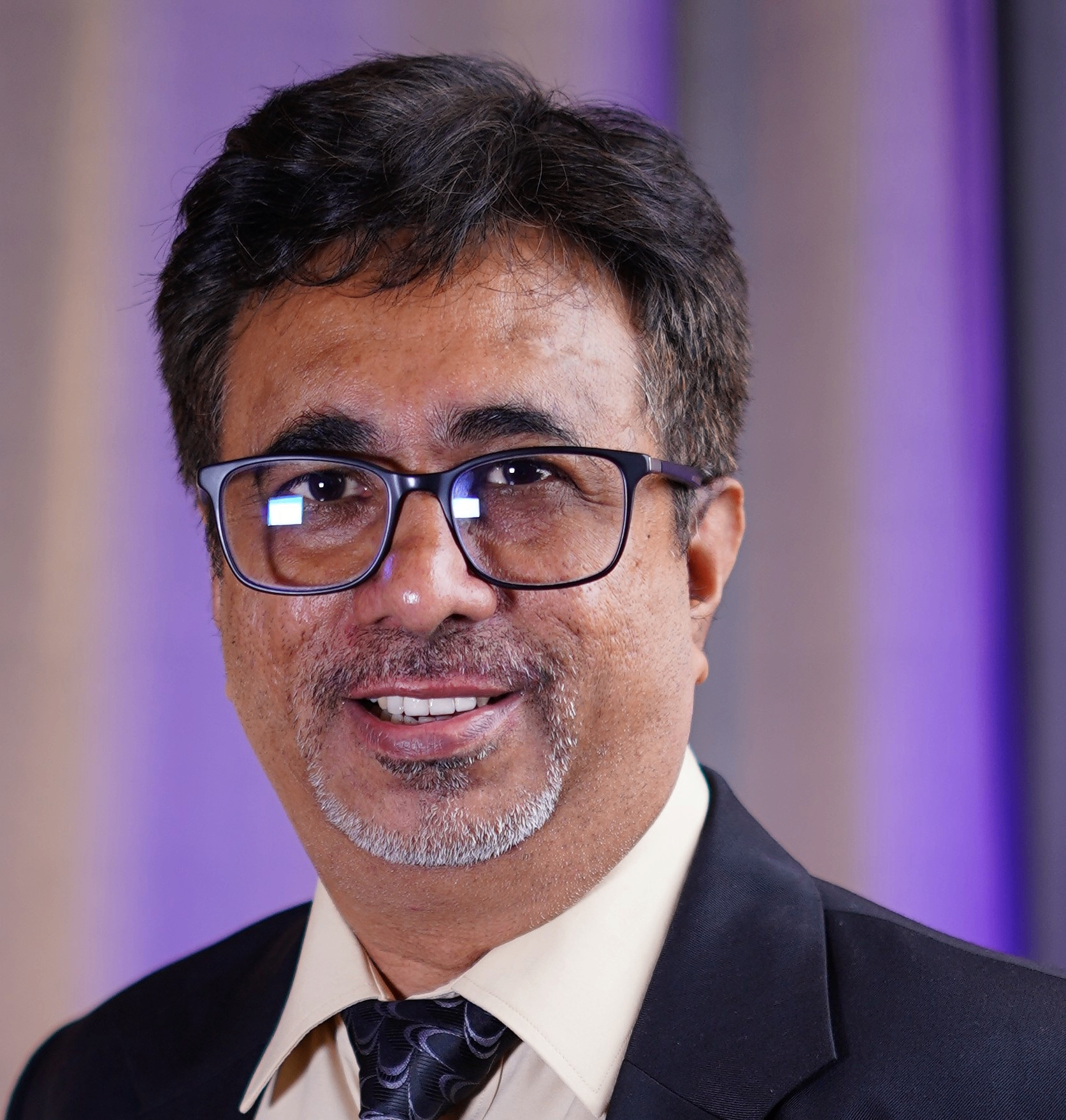
Ganesh Shevade
Co-Founder and CEO, AltaFuturis Solutions
Ganesh Shevade is Co-Founder and CEO of AltaFuturis Solutions and the curator of the AltaFuturis Applied AI MasterClasses for CXOs and senior leaders across the UAE, Africa, India and the United States. He works with boards and executive teams on Applied AI strategy, Generative AI adoption, Microsoft 365 Copilot rollouts, predictive analytics, and AI governance. Cohorts are delivered by AltaFuturis senior expert faculty alongside ConsultValiant FZC's Dubai-based GCC and Africa faculty.
Related articles
Regulation and Governance
EU AI Act in 2026, What Cross Border Operations from the UAE and Africa Must Now Do
The EU AI Act high-risk provisions are now in force. For CXOs in the UAE and Africa whose products, services or data touch the EU, the cross-border exposure is real. Four obligations, classification, documentation, conformity and post-market monitoring, will define which AI systems can continue to serve EU users in 2026 and which cannot.
Read articleAI News and Releases
Salesforce Agentforce in 2026, 84% Auto Resolution and the CX Playbook for CXOs
Salesforce Agentforce is now auto-resolving 84 per cent of qualifying service cases for leading reference customers. The number is the headline. The playbook is the case-mix qualification, the human-in-the-loop design and the measurement framework that turn the headline into a defensible board outcome.
Read articleDiagnostics and Frameworks
The Vendor Is Not the Problem, the Process Is, Why Seventy Percent of Enterprise AI Briefs Change in a Two-Hour Discovery Session
TechRadar nailed it on 6 June 2026. The single most common enterprise AI mistake is starting with the tool rather than the outcome. Seventy percent of vendor briefs change materially in a two-hour facilitated discovery session. The average switching cost when the wrong vendor is replaced is USD 315,000 per project. Here is the discovery-before-RFP sequence that recovers the majority of enterprise AI spend that is currently producing nothing.
Read articleBrowse related categories
Free Assessment
Enterprise AI Readiness Test
10 quick questions. Under 4 minutes. Get a personalised AI Readiness score, maturity level and recommended MasterClasses, with a branded PDF report delivered to your inbox.
On-Demand
Free Foundation Webinar
New to Applied AI? Watch our complimentary 45-minute foundation webinar. Understand what Generative AI means for your function, your industry and your career in the UAE, Africa and beyond.
Featured Onsite Cohorts, July 2026
Applied AI and Predictive Analytics, Onsite MasterClass in East Africa
Join our three day Onsite MasterClass on Applied AI and Predictive Analytics, From Data Insights to Scalable Growth. Delivered by AltaFuturis senior expert faculty. Standard Fee USD 1,200, USD 1,200 per participant.
Nairobi, Kenya
23 to 25 July 2026
Three day onsite workshop in Nairobi for Business Leaders, Functional Heads and Cross-Industry Professionals across Kenya and East Africa.
Reserve seat, NairobiAddis Ababa, Ethiopia
29 to 31 July 2026
Three day onsite workshop in Addis Ababa for Business Leaders, Functional Heads and Cross-Industry Professionals across Ethiopia and the Horn of Africa.
Reserve seat, Addis AbabaPersonalised Guidance
Have Questions? Send Us an Enquiry
Not sure which MasterClass fits your team? Want a bespoke in-house proposal for your organisation in the UAE, Nigeria, Kenya or elsewhere? Tell us your goals and we will recommend the right programme, format and schedule.
Recommended MasterClass for this topic
Adaptive Leadership in an AI-Accelerated Business Environment
Built for CXOs and senior business leaders. USD 800. Live cohorts and bespoke in-house formats available.
Continue exploring
- Take the free Enterprise AI Readiness Diagnostic
- Browse all six Applied AI MasterClasses
- Onsite MasterClass, Nairobi Kenya, 23 to 25 July 2026
- Onsite MasterClass, Addis Ababa Ethiopia, 29 to 31 July 2026
- About curator Ganesh Shevade, Co-Founder and CEO, AltaFuturis Solutions
- Talk to AltaFuturis about a bespoke cohort
- Why AltaFuturis Applied AI MasterClasses