UAE Country Playbooks
The UAE CXO Generative AI Playbook for 2026, A Practitioner Led Roadmap from Boardroom to Workforce

Why this playbook, and why now
In 2026 the United Arab Emirates is the most policy-mature, capital-rich and execution-oriented Generative AI market in the GCC. The federal National AI Strategy 2031 is now seven years into delivery, the dedicated AI, Digital Economy and Remote Work Applications Office sits at federal cabinet level, and Abu Dhabi has stood up MGX as a sovereign-scale AI and advanced technology investor. The UAE is also one of the few jurisdictions where, according to PwC Middle East, Generative AI efforts stand out globally.
Against that backdrop, the boardrooms we sit in across Dubai, Abu Dhabi and Sharjah are no longer debating whether Generative AI matters. The conversation has moved one full level higher. Boards now expect their Chief Executive, Chief Operating Officer, Chief Financial Officer, Chief Human Resources Officer, Chief Marketing Officer, Chief Digital Officer and Chief Risk Officer to each walk in with a written, costed, governable Generative AI plan that ladders up to the enterprise strategy.
This playbook is the structured artefact we hand UAE CXOs at the close of an AltaFuturis Applied AI MasterClass. It is deliberately practitioner-led, opinionated, and grounded in the regulatory, commercial and cultural reality of the Emirates. Treat it as a working draft you can adapt for your own organisation in a single weekend.
The seven questions every UAE board is asking in 2026
Across more than forty boardroom and CXO offsite engagements we have run since January 2025, the same seven questions surface in almost every meeting. If you can answer all seven on a single page, you are ready for your next quarterly board cycle. If you cannot, this playbook is structured to fix that gap section by section.
- What is our written 12 month Generative AI roadmap, and who owns it
- Which AI use cases are we prioritising, and what is the first cut business case for each
- What is our AI governance charter and how does it align to UAE federal AI policy
- What is our position on data residency, model selection and vendor lock in
- How are we measuring return on AI investment, and what is the payback period
- What is our AI talent strategy, are we hiring, training, partnering or all three
- What is our AI risk register, and what is our crisis playbook if a model misbehaves in production
Question 1, the written 12 month Generative AI roadmap
A roadmap is not a slide of icons. A board-grade Generative AI roadmap is a single page that names, for each of the next four quarters, the business outcomes you will deliver, the use cases that produce those outcomes, the budget envelope, the lead executive sponsor, and the success measure that will be reported back at the next quarterly review.
We recommend the following four-quarter cadence for UAE enterprises in 2026. Quarter one is foundation, the period during which you publish your AI policy, run a baseline productivity measurement across the top three to five roles, license your enterprise AI productivity stack, and complete CXO-level training. Quarter two is wave one rollout, where you redesign three to five high-volume workflows and roll out Microsoft Copilot for Microsoft 365, Google Gemini for Workspace, or the equivalent enterprise AI assistant to your first hundred power users.
Quarter three is verticalisation, the quarter where the heaviest function in your business, typically Customer Operations, Finance, or Sales and Marketing, gets a dedicated AI workstream with named use cases, a redesigned process, and a measured productivity uplift. Quarter four is institutionalisation, where you formalise the AI Centre of Excellence, publish version two of the AI policy, expand to a second wave of users, and report verified ROI to the board.
The single most common failure mode we see in UAE enterprises is that the roadmap exists in the CDO or CIO function but is not signed by the CEO. Without CEO ownership the roadmap quietly slips into the technology backlog. The fix is to make the roadmap a CEO-owned document, with the CDO, CIO or AI lead as the implementer rather than the owner.
Question 2, prioritising the first ten use cases
Most enterprises that engage AltaFuturis arrive with somewhere between forty and one hundred and twenty Generative AI use case ideas across their business units. The job of the CXO is not to fund all of them. The job is to ruthlessly prioritise the first ten, ship them, measure them, and use the credibility from those ten to fund the next thirty.
Our prioritisation framework is two-axis and deliberately simple. On the vertical axis, plot business value, defined as annualised hours saved, revenue uplift, cost reduced, or risk avoided. On the horizontal axis, plot implementation difficulty, defined as data readiness, integration complexity, change-management effort and governance sensitivity. Use cases that land in the high-value, low-difficulty quadrant are the first ten. They become your wave-one portfolio.
For UAE banks and family-office groups in particular, the highest-value, lowest-difficulty wave-one use cases in 2026 are typically: AI-augmented client onboarding and KYC review, automated credit memo drafting from approved underwriting templates, AI-assisted call-centre summarisation in Arabic and English, AI-assisted policy and SOP rewriting, AI-assisted treasury commentary, and AI-augmented internal audit walkthroughs. None of these touch core systems on day one, all of them produce measurable hours saved within ninety days, and all of them are governable inside a clear acceptable-use policy.
Document each shortlisted use case on a one-page canvas that names the business owner, the technology owner, the in-scope and out-of-scope tasks, the data sources, the model and tooling, the human-in-the-loop checkpoints, the success measure, the baseline measurement plan, and the responsible AI red lines.
Question 3, the AI governance charter that the UAE expects
The UAE federal AI policy environment, anchored by the official UAE Strategy for Artificial Intelligence, is value-led rather than penalty-led. That makes it easier to comply with in spirit, and it raises the bar on what a board considers acceptable. A UAE board will not be satisfied with a one-page AI policy lifted from a global template. It will expect a charter, not a slogan.
A board-grade AI governance charter for a UAE enterprise in 2026 contains eight named sections. Purpose and scope, defining where the charter applies and where it does not. Roles and decision rights, naming the AI Council, the AI Sponsor at executive level, the AI Risk Officer, and the operating-unit AI leads. Responsible AI principles, written in plain English and aligned to globally accepted principles such as fairness, transparency, accountability, privacy, security and human oversight.
Acceptable use, listing the categories of work where Generative AI is encouraged, the categories where it is permitted with a human checkpoint, and the categories where it is prohibited. Data classification and residency, stating which data classes can be sent to which model providers and which must remain inside the tenant or inside the country. Model and vendor selection, defining the criteria for adding a new AI tool to the approved list and the process for retiring one.
Risk management, listing the AI-specific risks the enterprise tracks, including hallucination risk, IP leakage, regulatory and reputational risk, and concentration risk on a single vendor. Audit and review, fixing the cadence at which the AI Council reviews policy, exceptions, incidents and benefits delivered. Communication and training, mandating that the policy is published internally, that every employee completes a baseline AI literacy module, and that all CXOs complete a structured Applied AI MasterClass.
Question 4, data residency, model choice and vendor concentration
UAE corporates, especially in regulated sectors, will routinely receive a board question that sounds like, why are we sending our customer data to a model that runs outside the UAE. The CXO answer in 2026 must be precise, not defensive.
There are now four practical options for hosting Generative AI workloads from a UAE tenant. Option one is hyperscaler-hosted models running in a UAE region, available from the major cloud providers with regional Generative AI services. Option two is hyperscaler-hosted models running in the closest non-UAE region, typically the European Union, with a contractual commitment that data is processed but not retained for training. Option three is sovereign or regionally-hosted Arabic-capable models, including those backed by UAE-domiciled infrastructure investors. Option four is on-premise or private-cloud open-weights models for the most sensitive workloads.
Most UAE enterprises end up running a portfolio. Option one or two for general productivity and customer-facing assistants, option three for Arabic-heavy or sovereignty-sensitive workloads, and option four for confidential strategic or M and A workloads. The job of the AI Council is to decide which workload runs where, document the decision, and review it every six months as the model landscape shifts.
Vendor concentration is a separate risk class that we now insist boards explicitly track. Standardising every employee on a single Generative AI assistant is great for adoption and terrible for negotiating leverage two years from now. We recommend a primary, a secondary and a permitted third for productivity assistants, and a similar split for foundation model APIs.
Question 5, return on Generative AI investment, the math the board will accept
Return on Generative AI investment is calculable in 2026. We no longer accept the answer that AI ROI is too soft to measure. The discipline is to baseline before you roll out, to measure during the rollout, and to report verified savings after the rollout.
The board-grade formula we hand CFOs is the following. For every wave-one use case, multiply the average minutes saved per task by the volume of tasks per month by the fully loaded cost of the role doing the task, and then divide by the all-in cost of the AI tooling, license, training and change effort that supports that use case. The output is a payback period in months.
For UAE enterprises in 2026, well-instrumented wave-one rollouts of Microsoft Copilot for Microsoft 365 across knowledge worker populations of two hundred to five hundred users typically pay back inside nine to fifteen months. AI-assisted contact-centre summarisation rollouts pay back faster, often inside six months, because the volume of tasks is higher. Agentic AI for back-office workflows, the frontier described in PwC Middle East's executive playbook on agentic AI, has more variable payback because the integration effort is heavier, but the measured uplift on the workflows that succeed is also larger.
The two non-negotiables for a defensible ROI are baseline measurement and verified post-rollout measurement. Baseline measurement means time-and-motion or task-volume sampling on the in-scope role for two weeks before rollout. Verified measurement means the same sample, by the same method, ninety days after rollout. Anything else is anecdote.
Question 6, talent, hire, train or partner
Talent is where most UAE Generative AI plans quietly stall. The CXO is asked to hire AI engineers in a market where global hyperscalers, sovereign AI investors and regional banks are all bidding for the same shortlist. The candid answer is that the talent strategy must be a portfolio of hire, train and partner.
Hire selectively for the small number of roles that will design the platform and own the most sensitive integrations. Typically this is one AI platform lead, one AI engineering lead, one AI governance lead, and one prompt and evaluation specialist per major business line. These are the roles where senior compensation, equity-equivalent retention and visible board-room access are justified.
Train aggressively for the much larger population of business leaders, function heads, line managers and individual contributors who must use AI in their existing roles. This is where structured Applied AI MasterClasses, function-specific cohorts and a measured AI literacy program deliver the highest leverage. The most common error is to under-invest in training the existing one thousand and over-invest in hiring the next ten.
Partner with consulting firms, regional system integrators and specialist Applied AI training providers to fill the gap between hiring and training. A right-sized partnership in 2026 is a six to twelve month engagement with a clear handover plan, not an indefinite resident-consultant model. AltaFuturis runs exactly this shape of engagement for UAE enterprises, anchored on the Generative AI MasterClass for CXOs and Business Leaders, supplemented by function-specific MasterClasses on Marketing, Customer Experience, Operations and Microsoft Copilot productivity.
Question 7, AI risk register and the crisis playbook
The board will eventually ask the CXO what happens when, not if, a Generative AI system makes a public mistake. A crisis playbook for AI incidents is now a standard board expectation in the UAE.
The risk register that supports the playbook lists at least the following AI-specific risk classes. Hallucination risk, where a model confidently states something false in a customer-facing context. IP and data leakage risk, where confidential information is sent to a model in a way that breaches the data residency policy. Bias and fairness risk, where a model produces systematically different outcomes for protected groups. Regulatory and reputational risk, where a model output triggers a regulatory enquiry or social media incident. Vendor concentration risk, model deprecation risk, and supply-chain risk on the underlying compute and data.
The crisis playbook itself is a sequenced, named-owner document. Detection, the monitoring and human-in-the-loop checkpoints that flag an incident. Containment, the kill switch that disables the affected workflow within minutes, not hours. Communication, the pre-approved template that goes to the CEO, the board chair, the regulator if applicable, and the customer if applicable. Remediation, the rollback plan, the root-cause review, and the policy update. Learning, the post-incident review at the AI Council and the public-facing summary that earns trust back.
We recommend that every UAE enterprise dry-run the crisis playbook at least twice in the first year of Generative AI rollout, in the same way mature organisations dry-run their cyber incident playbook.
How AltaFuturis runs Applied AI MasterClasses across the UAE in 2026
AltaFuturis runs the Applied AI MasterClass series across the UAE in three formats, all of them aligned to the playbook in this article. The full range is described on the AltaFuturis UAE landing page, and the flagship CXO program is documented on the Generative AI MasterClass for CXOs and Business Leaders page.
Onsite cohorts run at the participant organisation's office in Dubai, Abu Dhabi or Sharjah, or as an executive offsite at a hotel of the participant's choice in Ras Al Khaimah, Umm Al Quwain or Fujairah. Virtual cohorts run live across GST business hours over four sessions of three hours each. Online cohorts combine self-paced video with two live coaching sessions per week.
Six specialised programs are available in every cohort cycle. The Generative AI MasterClass for CXOs and Business Leaders. The Applied AI and Predictive Analytics MasterClass. The AI Driven Data Storytelling MasterClass. The Adaptive Leadership MasterClass for AI Accelerated Business. The AI Strategy and Digital Innovation MasterClass for HR Professionals. The AI Customer Segmentation and Personalised Marketing MasterClass.
Pricing is set in USD for global parity. Online MasterClasses are USD 800 per participant. Onsite MasterClasses are USD 1200 per participant. UAE corporates can pay in AED at the prevailing exchange rate. Group discounts apply for cohorts of five or more participants from the same organisation.
What a 90 day Applied AI sprint looks like for a UAE enterprise
If you take only one section of this playbook into your next executive committee meeting, take this one. A defensible 90 day Applied AI sprint for a UAE enterprise has three named workstreams.
Workstream one, executive enablement. Days one to thirty. Run an Applied AI MasterClass for CXOs and Business Leaders for the top thirty leaders. Publish version one of the AI policy. Stand up the AI Council with named owners. Approve the use case shortlist of ten. Sign the roadmap.
Workstream two, productivity rollout. Days fifteen to seventy-five. License Microsoft Copilot for Microsoft 365 or Google Gemini for Workspace for the first one hundred power users. Run the Applied AI and Predictive Analytics MasterClass for those users and their managers. Publish the team-level prompt library. Measure baseline productivity and weekly adoption.
Workstream three, function deep-dive. Days thirty to ninety. Pick one function, typically Marketing, Customer Experience, Operations, Finance or HR. Run the function-specific MasterClass for the leadership team of that function. Implement two to three function-specific use cases end to end. Report measured uplift to the AI Council on day ninety.
By day ninety the CEO has a defensible board narrative, the policy is in market, the first one hundred users are visibly productive, and one function has a verified result. From this base, waves two and three become an execution problem rather than a sales problem.
Where to start this week
If you are a CXO in the UAE reading this on the weekend, the highest-leverage use of the next seven days is the following. On Monday, send the seven questions in this article to your executive committee and ask each function head to draft one page in response. On Tuesday and Wednesday, read the PwC Middle East analysis of the GCC AI revolution and the PwC Agentic AI executive playbook end to end. On Thursday, sit with your CDO, CIO and CHRO and stress test the ten-use-case shortlist against the prioritisation framework above. On Friday, book your team into the next available AltaFuturis MasterClass cohort.
Two of the next four MasterClass cohorts in the UAE are already at fifty percent capacity. The leaders who become the AI champions of their organisations in 2026 are doing this work this quarter, not next quarter.
Frequently Asked Questions
Who is this UAE Generative AI playbook for?
This playbook is written for CXOs and senior leaders in UAE based enterprises and family-office groups, including CEOs, COOs, CFOs, CHROs, CMOs, CDOs, CIOs and CROs in Dubai, Abu Dhabi, Sharjah, Ras Al Khaimah, Umm Al Quwain, Ajman and Fujairah. It is also useful for board members, board committee chairs and family-business promoters who are sponsoring an enterprise Generative AI program in 2026.
How long does a typical UAE enterprise Applied AI rollout take in 2026?
A defensible first wave of an Applied AI rollout in a UAE enterprise of two hundred to five hundred knowledge workers takes ninety days for the executive enablement, productivity rollout and one function deep-dive described in the playbook. A board-grade verified ROI typically lands at the one hundred and eighty day milestone, after the second cohort is trained and the first function-level use cases are stable in production.
What is the pricing for the AltaFuturis Applied AI MasterClasses in the UAE?
Pricing for all six AltaFuturis Applied AI MasterClasses is USD 800 per participant. For Onsite MasterClasses, pricing is USD 1050 per participant till 30 June 2026, with regular pricing of USD 1200 per participant thereafter. UAE corporates can pay in AED at the prevailing exchange rate, and group discounts apply for cohorts of five or more participants from the same organisation.
Are the MasterClasses delivered onsite in Dubai and Abu Dhabi, or only virtually?
All six AltaFuturis Applied AI MasterClasses are delivered in three formats. Onsite cohorts run at the participant organisation's office or at an executive offsite venue in Dubai, Abu Dhabi, Sharjah, Ras Al Khaimah, Umm Al Quwain or Fujairah. Virtual cohorts run live across GST business hours over four sessions of three hours each. Online cohorts combine self-paced video with two live coaching sessions per week. Most UAE enterprises in 2026 choose a hybrid of onsite for the CXO cohort and virtual for the wider leadership cohort.
Does this playbook align to the UAE National AI Strategy 2031?
Yes. The governance, talent and responsible AI sections of this playbook are deliberately aligned to the UAE National Strategy for Artificial Intelligence 2031, the official UAE Government strategy portal, and the work of the UAE AI, Digital Economy and Remote Work Applications Office. Direct links to all three primary sources are provided in the references section at the bottom of this article.
References and further reading
- UAE National Strategy for Artificial Intelligence 2031, official PDF, AI Office, UAE Government
- UAE Strategy for Artificial Intelligence on the official UAE Government portal, u.ae
- AI, Digital Economy and Remote Work Applications Office of the UAE, ai.gov.ae
- MGX, the Abu Dhabi based AI and advanced technology investor, MGX
- PwC Middle East, The GCC plays a leading role in the AI revolution, PwC
- PwC, UAE efforts on Generative AI stand out globally, PwC Middle East Media Centre
- PwC, Agentic AI, the new frontier in GenAI, an executive playbook (2024), PwC
- UAE Cabinet adopts National AI Strategy 2031, official news release (2019), UAE Cabinet
- AltaFuturis Applied AI MasterClasses for the UAE, Dubai, Abu Dhabi and Sharjah, AltaFuturis
- Generative AI MasterClass for CXOs and Business Leaders, AltaFuturis
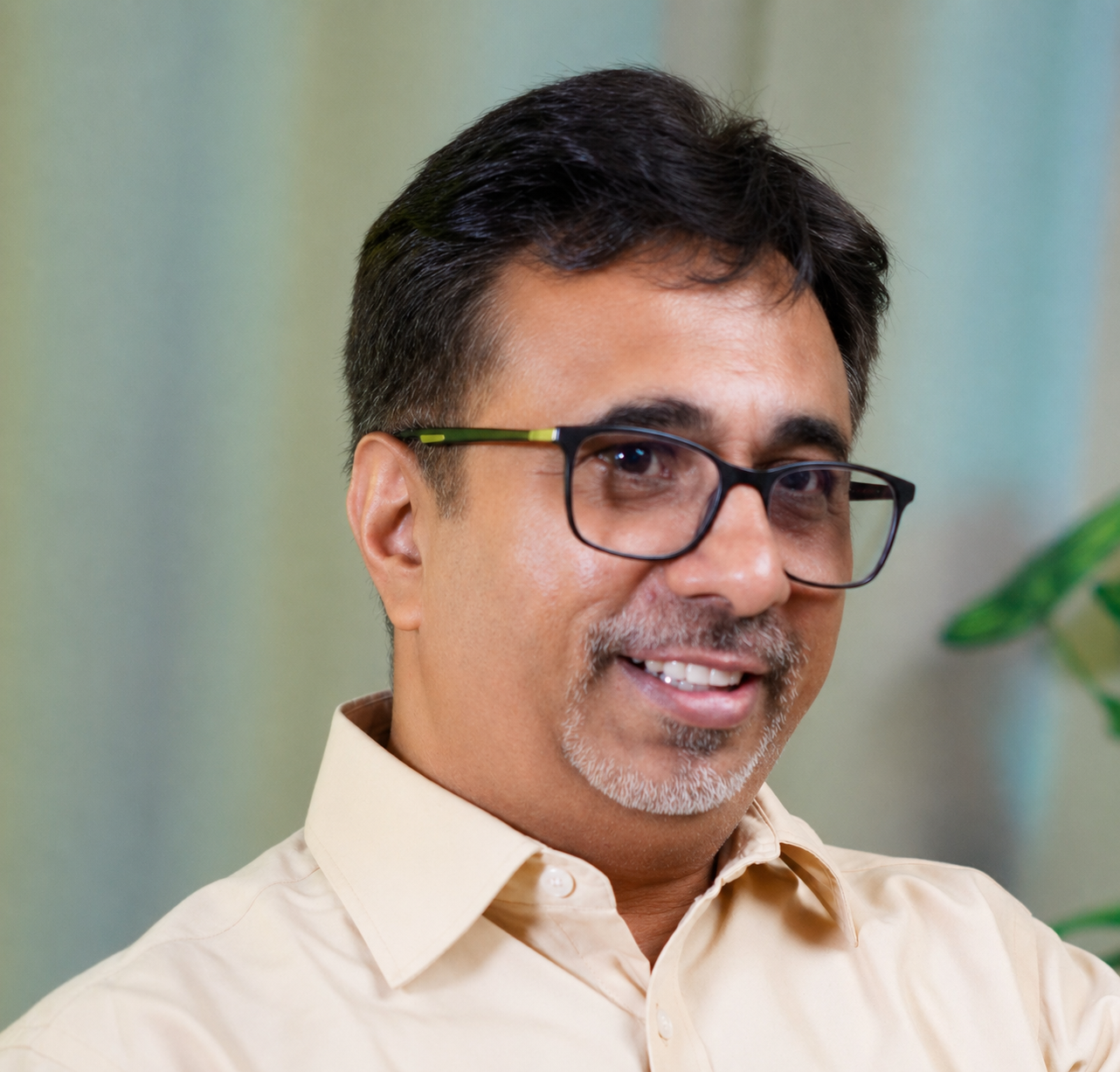
About the author
Ganesh Shevade
Co-Founder and CEO, AltaFuturis Solutions
Ganesh Shevade is Co-Founder and CEO of AltaFuturis Solutions and the curator of the AltaFuturis Applied AI MasterClasses for CXOs and senior leaders across the UAE, Africa, India and the United States. He works with boards and executive teams on Applied AI strategy, Generative AI adoption, Microsoft 365 Copilot rollouts, predictive analytics, and AI governance. Cohorts are delivered by AltaFuturis senior expert faculty alongside ConsultValiant FZC's Dubai-based GCC and Africa faculty.
Related articles
United Arab Emirates Country Playbooks
Applied AI MasterClasses in United Arab Emirates, Generative AI Training for Non-Technical CXOs and Decision Makers in 2026
United Arab Emirates's boards in Dubai and beyond are operationalising AI in 2026. The AltaFuturis Applied AI MasterClasses give non-technical CXOs, MDs, Country Heads and senior leaders in the UAE a structured, board grade Generative AI curriculum across six programs, with July and August 2026 cohorts in Virtual, Online and Onsite formats.
Read articleCity Guides
The Dubai Applied AI MasterClass Guide for 2026, A CXO Roadmap for the Emirate
Dubai is the most AI-ready city in the GCC in 2026. This guide is the Applied AI MasterClass roadmap we hand Dubai CXOs, from sector use cases and format selection to cohort dates and Seat planning.
Read articleApplied AI Training Kenya
Nairobi AI Transformation 2026: How Kenyan Enterprises Turn Applied AI Into Measurable Growth
AI transformation in Nairobi is no longer a pilot conversation. Boards want a funded plan, named owners and measurable outcomes. This guide sets out how Kenyan enterprises move from experiments to enterprise AI capability, and where leadership training and a readiness audit fit.
Read articleBrowse related categories
Free Assessment
Enterprise AI Readiness Test
10 quick questions. Under 4 minutes. Get a personalised AI Readiness score, maturity level and recommended MasterClasses, with a branded PDF report delivered to your inbox.
On-Demand
Free Foundation Webinar
New to Applied AI? Watch our complimentary 45-minute foundation webinar. Understand what Generative AI means for your function, your industry and your career in the UAE, Africa and beyond.
Featured Onsite Cohorts, July 2026
Applied AI and Predictive Analytics, Onsite MasterClass in East Africa
Join our three day Onsite MasterClass on Applied AI and Predictive Analytics, From Data Insights to Scalable Growth. Delivered by AltaFuturis senior expert faculty. Standard Fee USD 1,200, USD 1,200 per participant.
Nairobi, Kenya
23 to 25 July 2026
Three day onsite workshop in Nairobi for Business Leaders, Functional Heads and Cross-Industry Professionals across Kenya and East Africa.
Reserve seat, NairobiAddis Ababa, Ethiopia
29 to 31 July 2026
Three day onsite workshop in Addis Ababa for Business Leaders, Functional Heads and Cross-Industry Professionals across Ethiopia and the Horn of Africa.
Reserve seat, Addis AbabaPersonalised Guidance
Have Questions? Send Us an Enquiry
Not sure which MasterClass fits your team? Want a bespoke in-house proposal for your organisation in the UAE, Nigeria, Kenya or elsewhere? Tell us your goals and we will recommend the right programme, format and schedule.
Recommended MasterClass for this topic
AI Strategy and Digital Innovation for HR Professionals
Built for CHROs, HR Directors and People & Culture leaders. USD 800. Live cohorts and bespoke in-house formats available.
Continue exploring
- Take the free Enterprise AI Readiness Diagnostic
- Browse all six Applied AI MasterClasses
- See MasterClass cohorts in UAE
- Onsite MasterClass, Nairobi Kenya, 23 to 25 July 2026
- Onsite MasterClass, Addis Ababa Ethiopia, 29 to 31 July 2026
- About curator Ganesh Shevade, Co-Founder and CEO, AltaFuturis Solutions
- Talk to AltaFuturis about a bespoke cohort
- Why AltaFuturis Applied AI MasterClasses